
A project born from a precise belief
Not all investments arise from a financial opportunity. Some arise from a conviction.
In our case, the belief is clear: the Laterza majolica It cannot remain confined to a peripheral area, nor be perceived as an artisanal production destined exclusively for a local market. It is an art form that, due to its history, quality, and identity, deserves a international showcase.
From this vision comes the opening of our new store in Matera, a city that in recent years has demonstrated its ability to engage with the world, attracting visitors from every continent. This is no coincidence, but a strategic and cultural decision.
Bring the Laterza ceramics In Matera, this means placing it in a context that enhances it, but also challenges it. Because leaving its native territory means engaging with a more demanding, more attentive audience, more accustomed to quality.
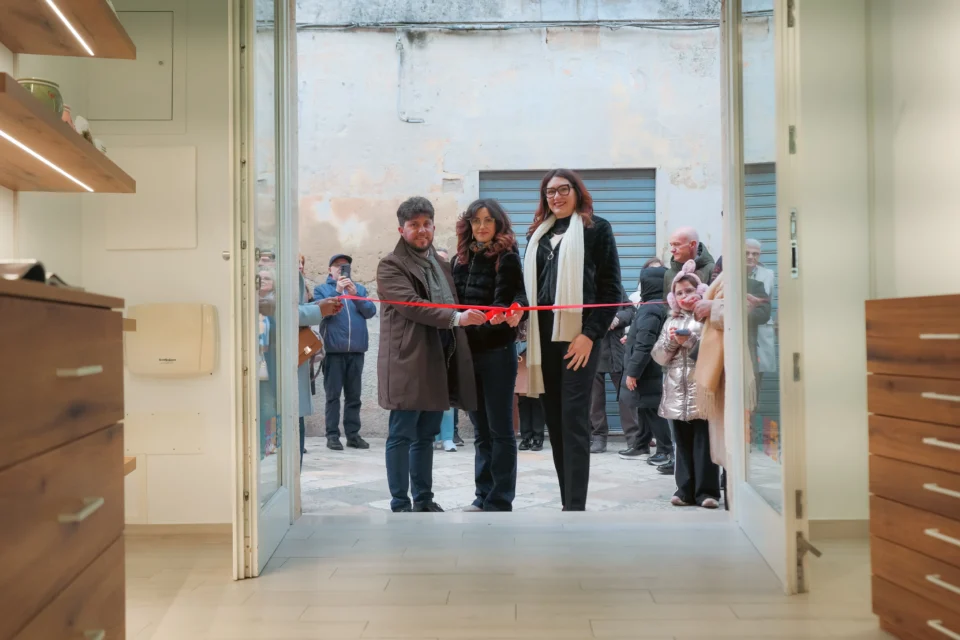
The choice of Matera: an international showcase
Open a store in Matera it means entering one of the most significant tourist flows in Southern Italy.
But reducing this choice to a simple business opportunity would be a mistake.
Today, Matera represents a meeting point between culture, tourism, and the pursuit of authenticity. Visitors come here not simply seeking an object, but an experience, a story, a connection to the region.
And it is precisely in this context that the Apulian majolica, and in particular that of Laterza, can find a new dimension.
Not as a tourist product, but as a cultural expression.
Not as a souvenir, but as an object full of meaning.
Laterza: a heritage at risk of remaining invisible
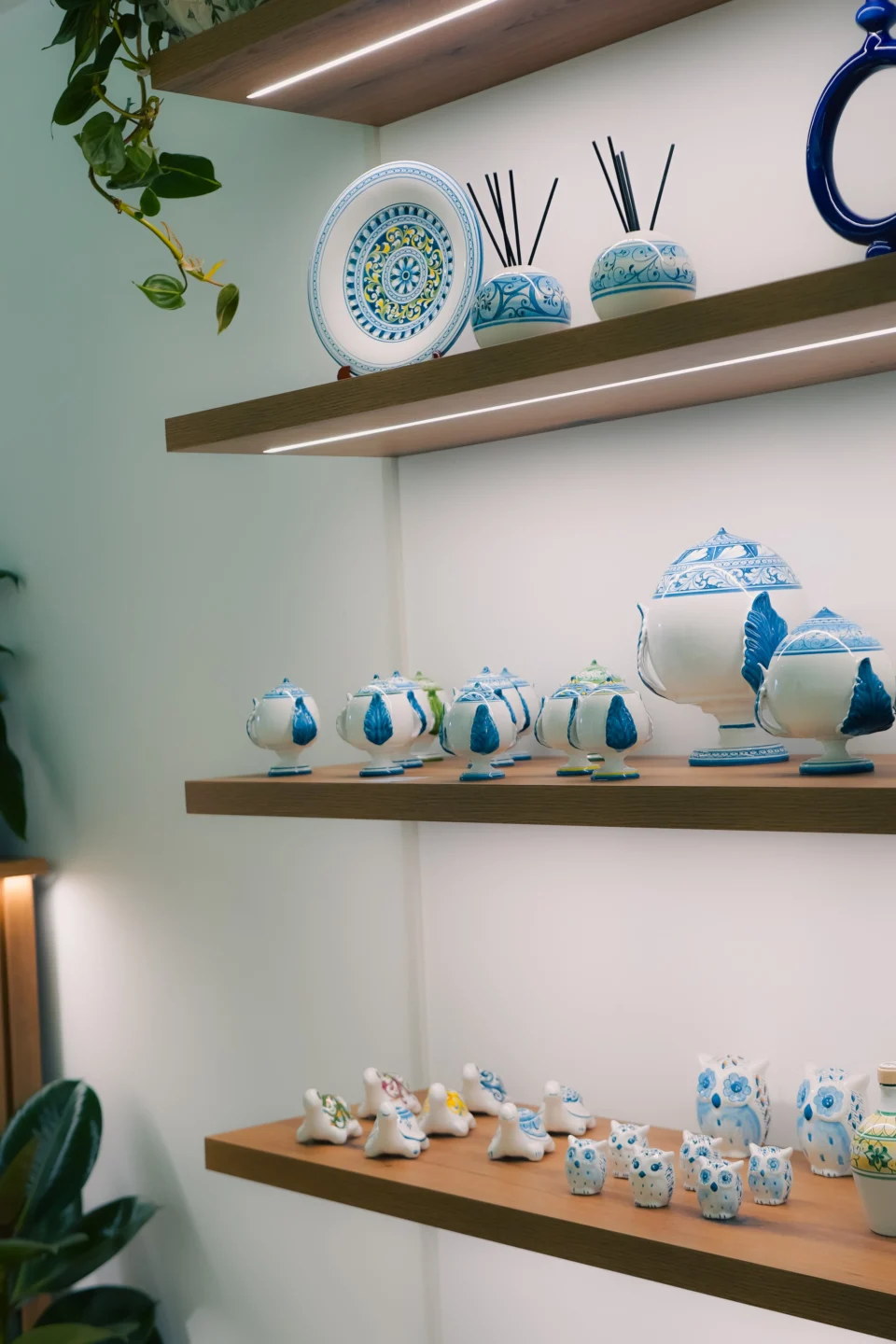
Laterza is recognized as a center of ancient ceramic tradition and, over the centuries, has developed a production of great artistic and technical value. Already between the 16th and 17th centuries, Laterza's kilns were producing artifacts destined for distant markets, a sign of quality recognized beyond local borders. .
Yet today there is an evident contradiction.
On the one hand, the artistic ceramics from Laterza It represents a high-level cultural heritage. On the other hand, the region where it was born is unable to guarantee the visibility necessary to sustain its growth.
This imbalance creates a real risk: that of progressive marginalization. Not because value is lacking, but because the context capable of amplifying it is lacking.
This is where the need for change arises.
Beyond the Souvenir: The Value of Authenticity
One of the main problems of contemporary craftsmanship is its progressive trivialization.
Many objects are presented as handcrafted, but in reality they are the result of standardized production, lacking identity and connection to the local area. This phenomenon has created a distortion: consumers struggle to distinguish between what is authentic and what is not.
In this scenario, talking about authentic craftsmanship in Matera it means taking a stand.
This means that not everything that is sold as artisanal is actually artisanal.
It also means taking responsibility to prove it.
In our case, this demonstration involves a fundamental element: direct production.
From the shop to the point of sale: a different model
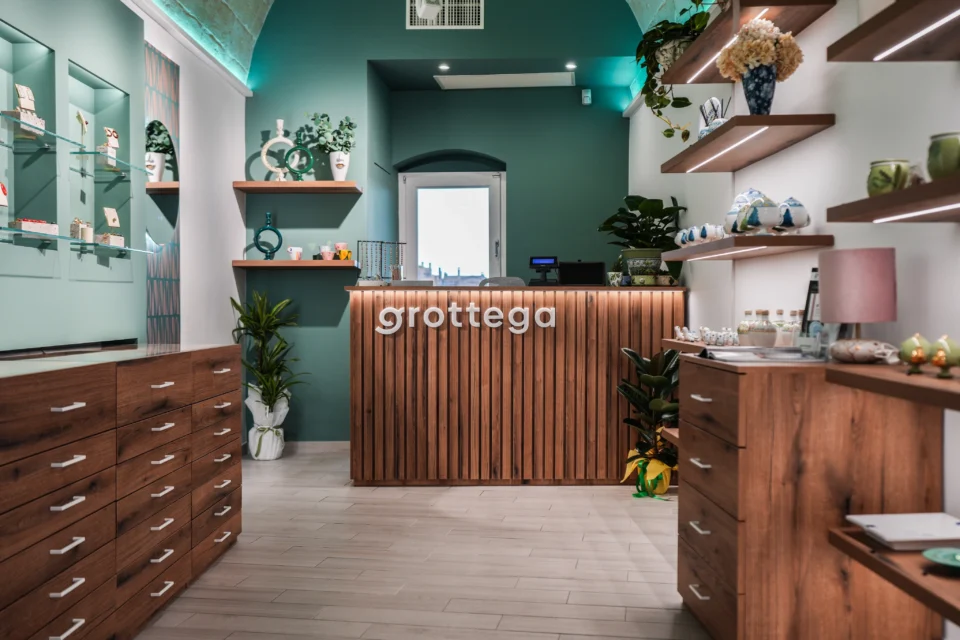
Our store in Matera is not just a simple shop.
It is the extension of a shop.
All the products on display are made directly by us, in our workshop in Laterza. This isn't a minor detail, but the heart of the project.
This means that each object tells the story of a real process, made up of research, technique, errors, corrections, and skills that develop over time.
It also means that there is no separation between those who produce and those who sell.
In a market where many stores limit themselves to selecting products to resell, we have chosen a more complex, but also more coherent model: that of the short supply chain, in which the handmade ceramics in Matera maintains a direct link with its place of origin.
Telling your origins: a duty, not a choice
Bring the Laterza majolica In Matera, it doesn't just mean selling it. It means telling its story.
Telling the origins of an object means restoring its depth. It means explaining that behind a decoration lies a story, behind a technique lies a tradition, behind a form lies a culture.
In our work, this aspect is central.
We don't produce objects "at random," but rather seek to craft works that have a narrative coherence. This approach stems from a specific consideration: contemporary craftsmanship cannot simply replicate the past, but must reinterpret it.
This is where the concept of evolution comes in.
Preserving without imitating: the difficult balance
One of the most widespread risks in the artistic ceramics sector is that of mere reproduction.
Many labs simply copy historical models, without introducing any innovation. This approach may work in the short term, but in the long run it leads to a loss of identity.
Preserving tradition does not mean freezing it.
It means understanding it and reinterpreting it.
In our case, this translates into constant research work, which starts from the study of the traditional majolica from Laterza, but it develops in new directions, both from an aesthetic and conceptual point of view.
Projecting tradition into the future
If tradition remains locked in the past, it is destined to disappear.
For this reason, our project does not limit itself to preserving, but aims to project the Apulian artistic ceramics into the future. This means consciously addressing multiple dimensions of craftsmanship: from technical quality, which remains the essential foundation of every product, to stylistic research, necessary to avoid sterile repetition of the past; from market positioning, which determines the product's perceived value, to communication, which effectively conveys identity and meaning.
From this perspective, the Matera store represents one piece of a broader strategy. It's not a point of arrival, but a transition. It's a living space, where we can observe and understand customer behavior, capture reactions, identify which products spark the most interest, and which narratives truly connect.
A conscious investment
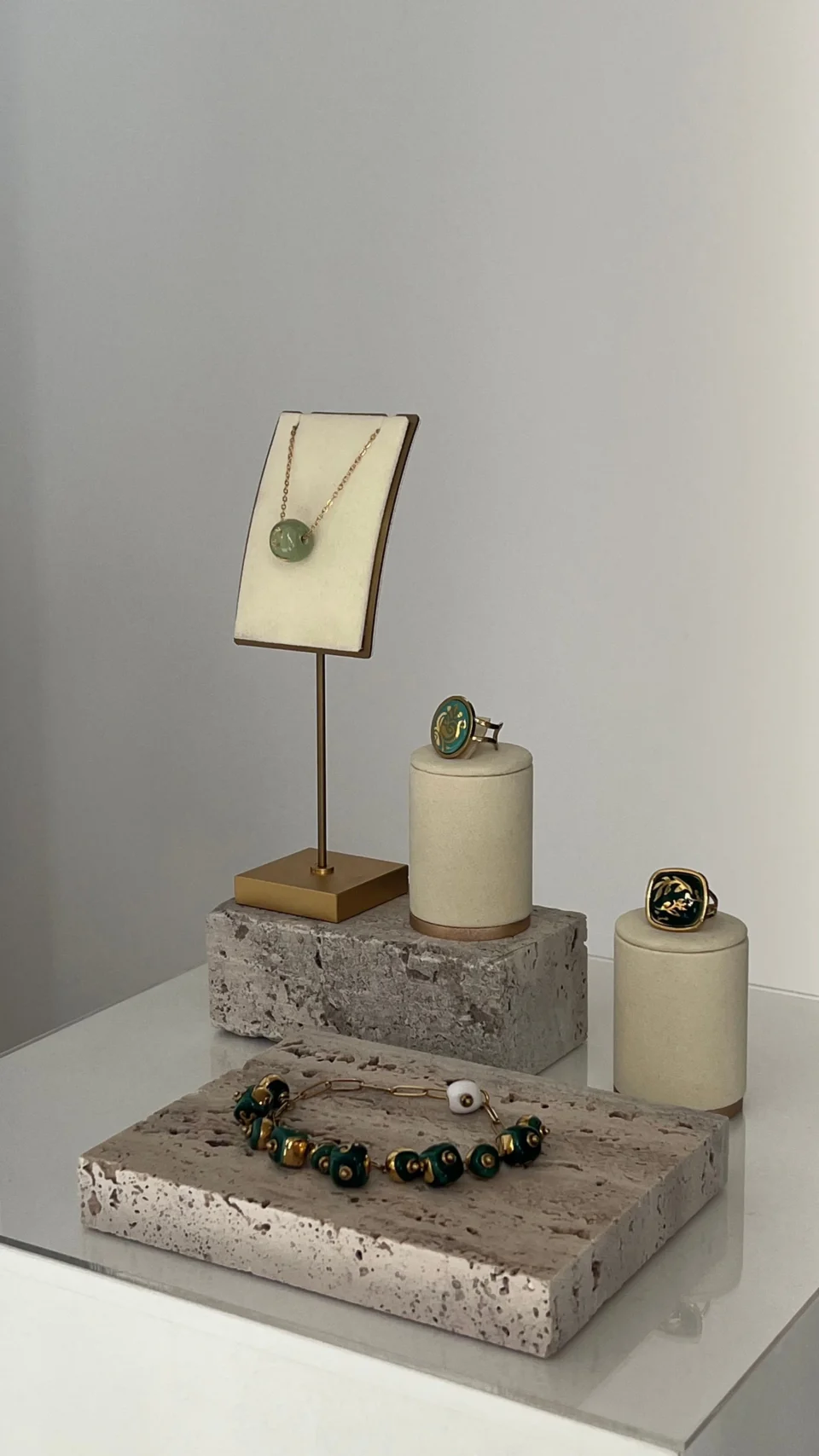
Opening a store in a city like Matera requires a significant investment, both financially and operationally.
It's not just about renting, setting up, or managing. It's about sustaining a vision over time.
Many businesses open with the goal of immediate results. We understand that positioning takes time.
Especially when you offer a product that is not standardized, but built on a strong identity.
This type of project can't be evaluated solely based on initial sales. It must be analyzed from a broader perspective, taking into account brand building and brand perception.
The commitment to Laterza
Opening in Matera doesn't mean abandoning Laterza. On the contrary. Our goal is to create a connection between the two regions, where one becomes the place of production and the other the place of visibility. Laterza remains the heart of the project. It's where ideas are born, where techniques are developed, where the product's identity is built. Matera becomes the bridge. A bridge that allows Laterza ceramics to reach a wider audience, but also to return in the form of value, experience and growth.